INRIX · Jun 2026 – Present
INRIX Pay: In-Car Parking and Payments
A car dashboard app that finds parking, navigates you there, and pays for it. I designed it in Figma and built it on real INRIX data. Debuting at CES 2027.
Impact: Went from a Figma flow to a working in-car app on real San Francisco curb data in about a month.
- Role
- Product Designer & Design Engineer (solo)
- Timeline
- Jun 2026 – Present
- Company
- INRIX
- Automotive HMI
- Prototyping
- Design Engineering
- Interaction Design
Walkthrough
The problem
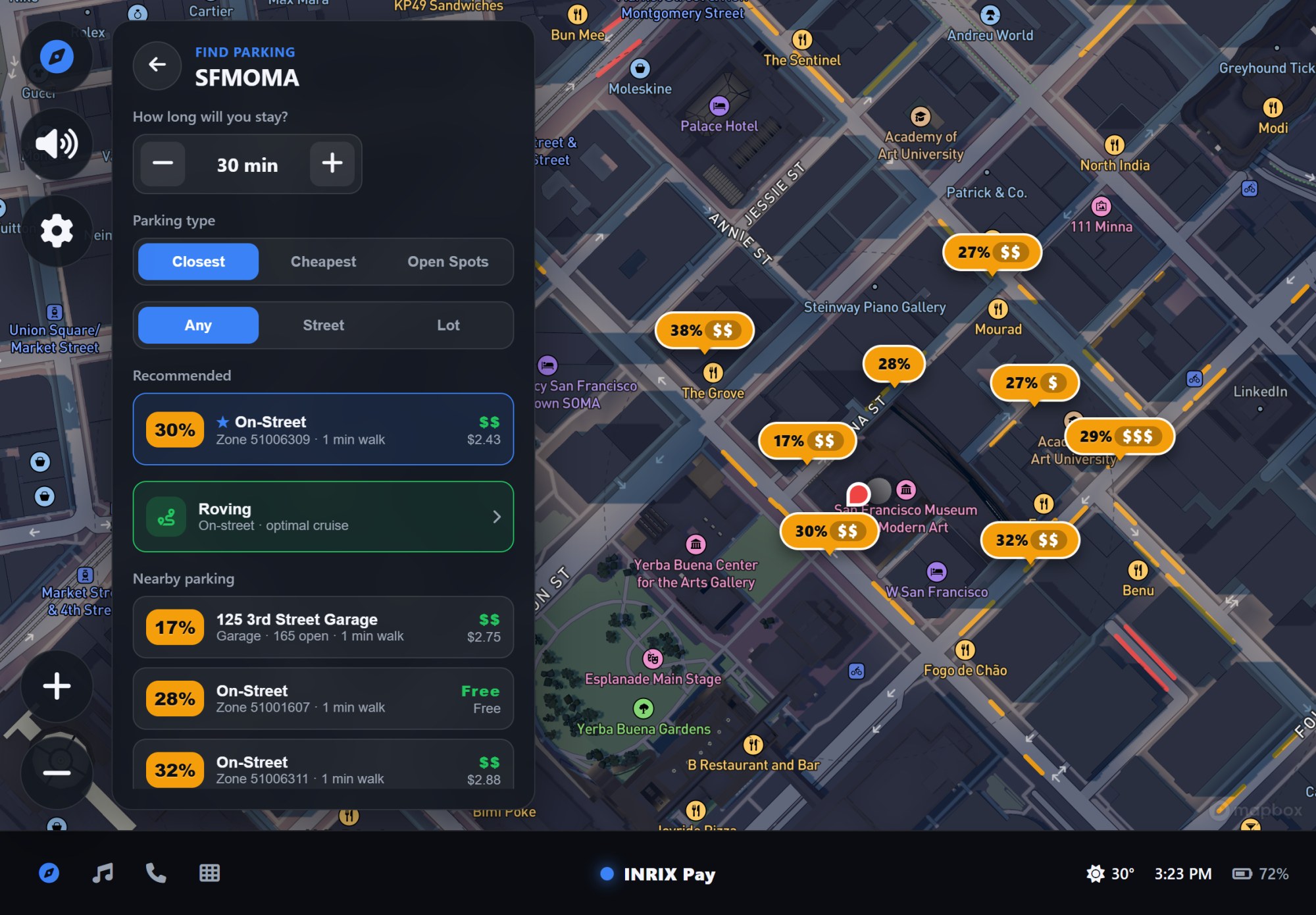
You know the routine: circle the block, find a spot, then fumble with a meter app. INRIX already knows how likely you are to find an open spot on each block and in each garage, but that isn't something you can really show an automaker with a static Figma prototype.
What I needed was a real product on a real car screen, running INRIX parking data and INRIX Pay, that automakers could get their hands on.
Key decisions
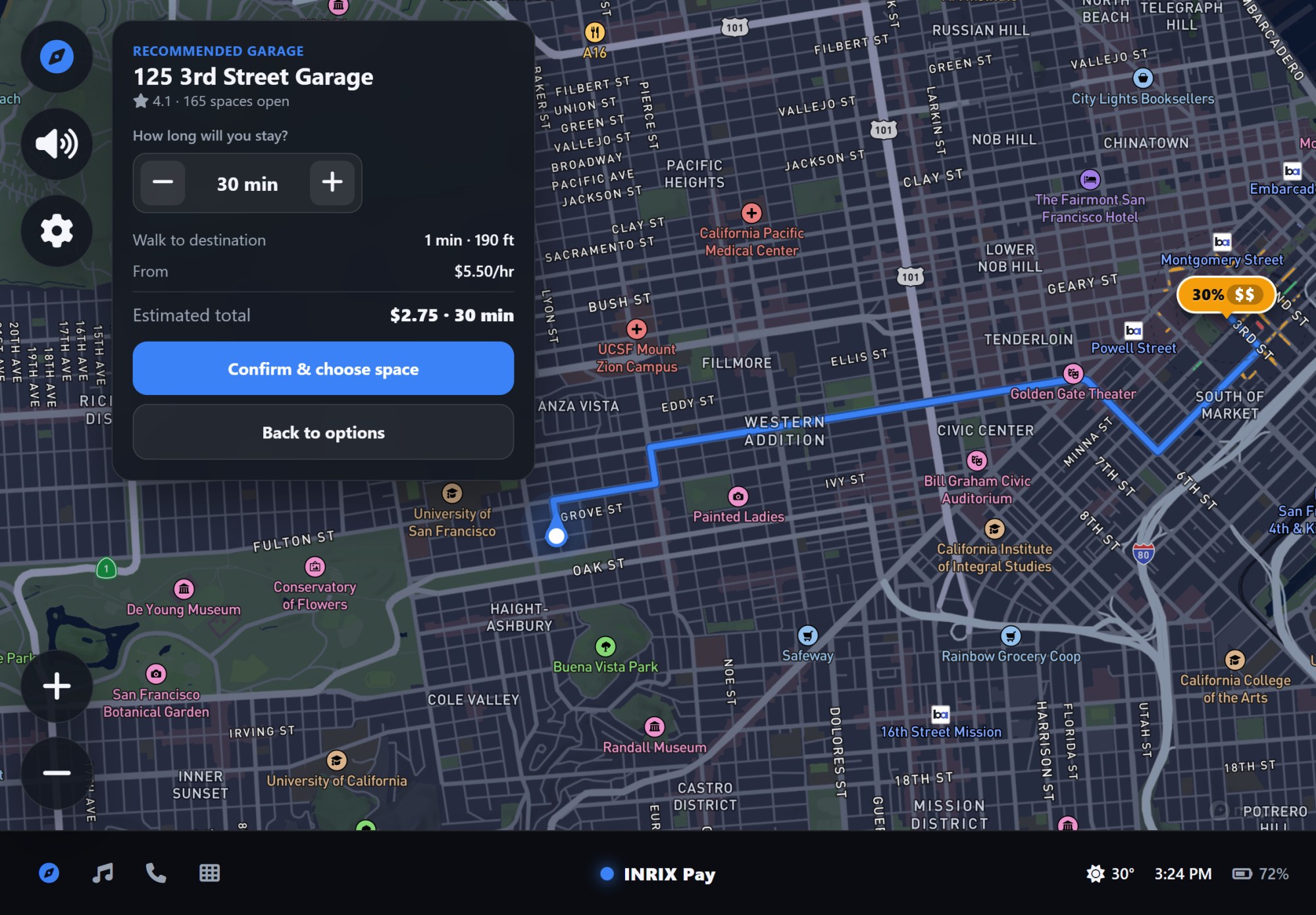
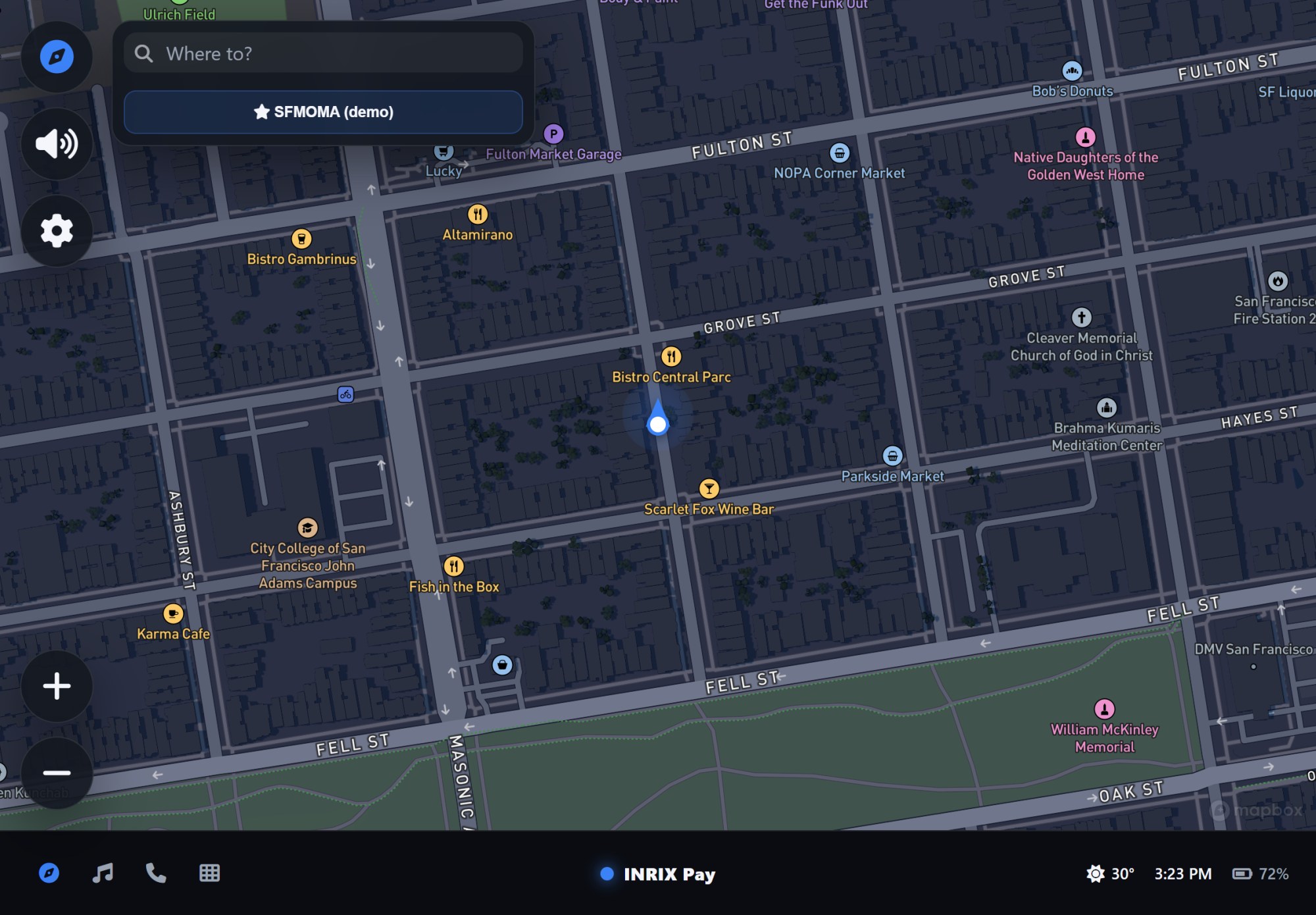
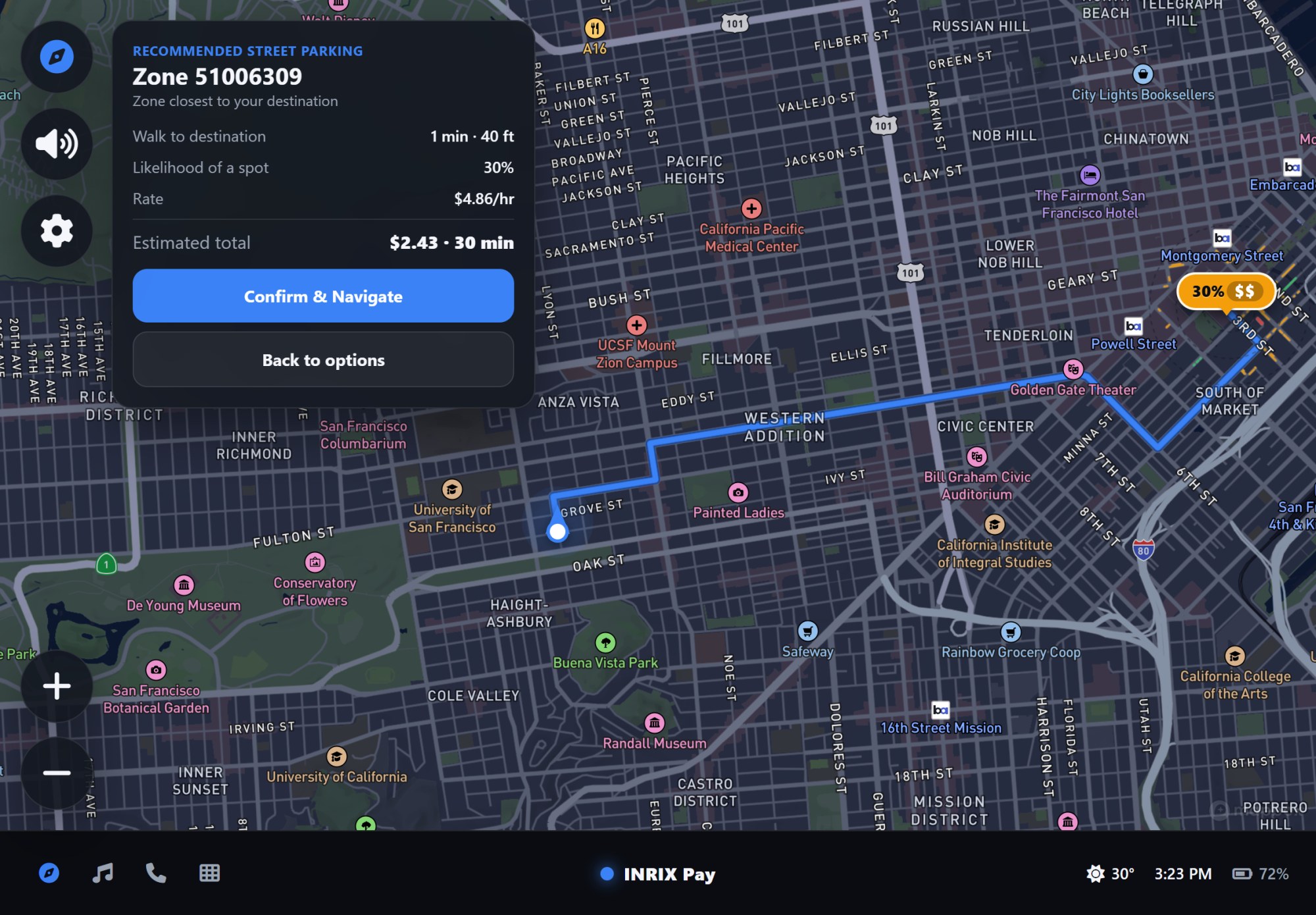
Glance, then drive. Every screen answers one question at a glance. That means big type, the main action within reach, and nothing you'd have to read while moving. The recommendation card shows walk time, chance of a spot, rate, and estimated total, and nothing else. Additionally, the whole interface can flip sides so that the controls sit next to the driver in both left- and right-hand-drive cars.
The light follows the clock. The map and interface shift from dawn to day to dusk to night using Mapbox's 3D light presets. The reason is that a bright screen at night hurts your eyes and dazzles other drivers, while a dark one at noon washes out. Drivers can override this in settings.
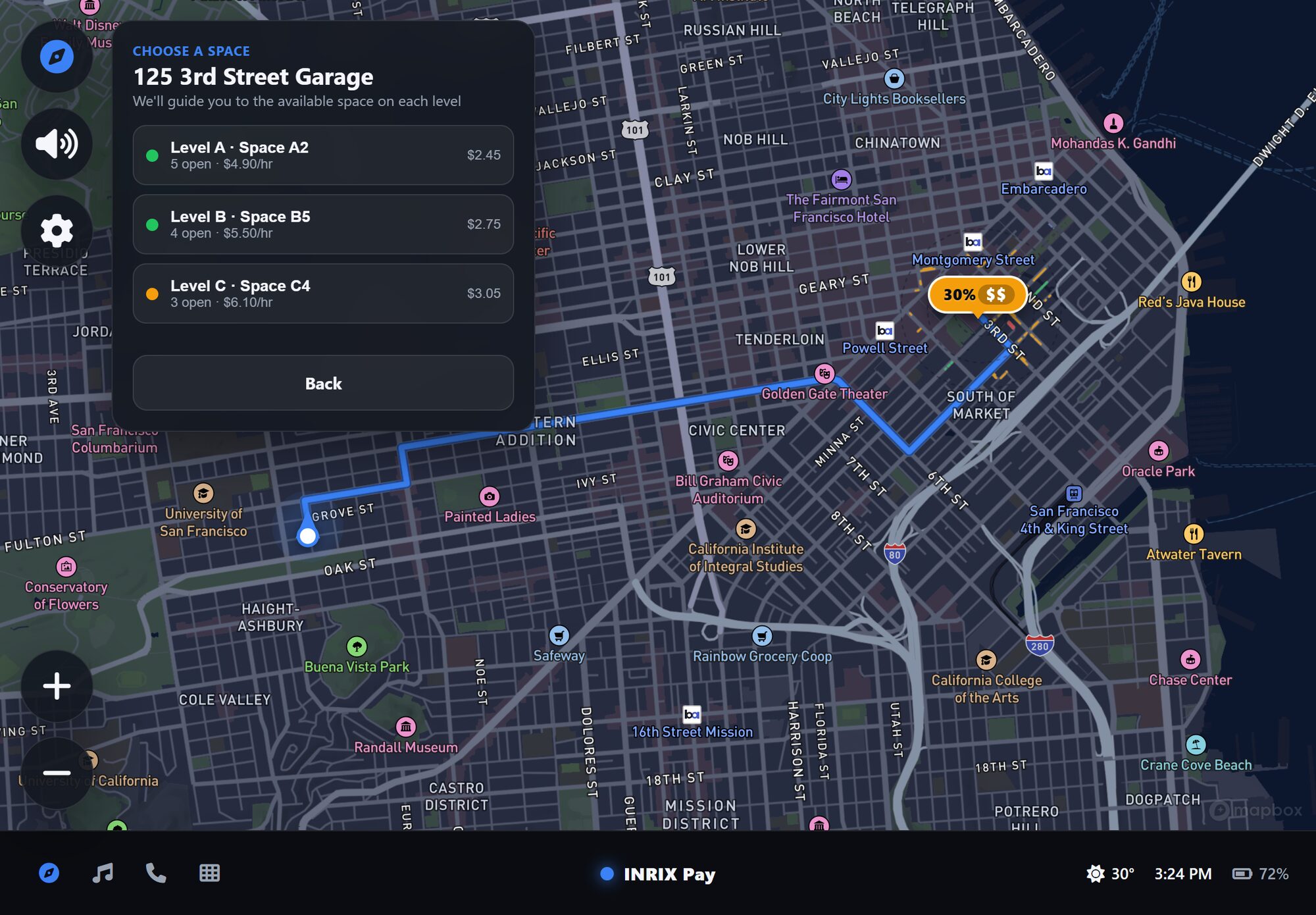
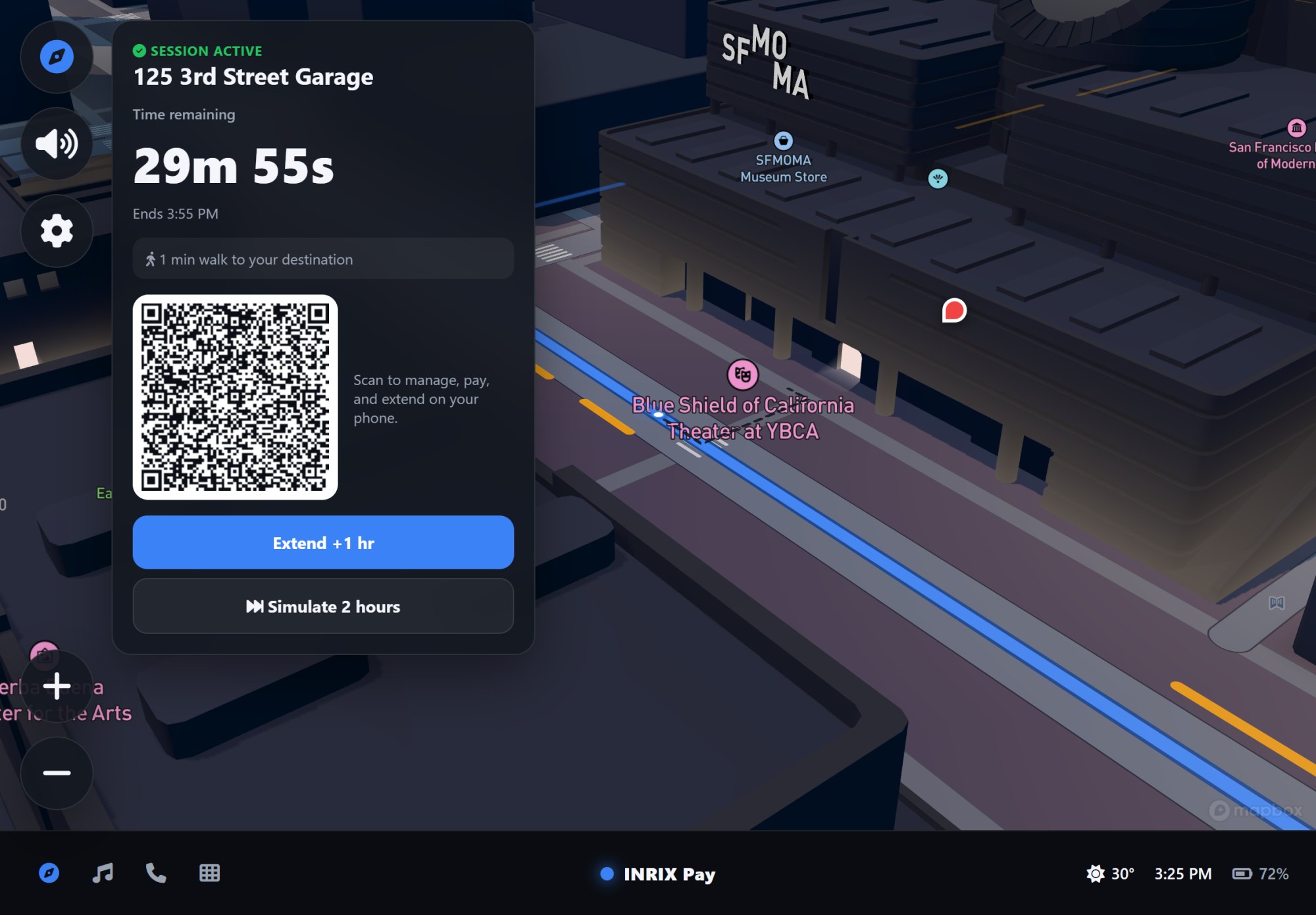
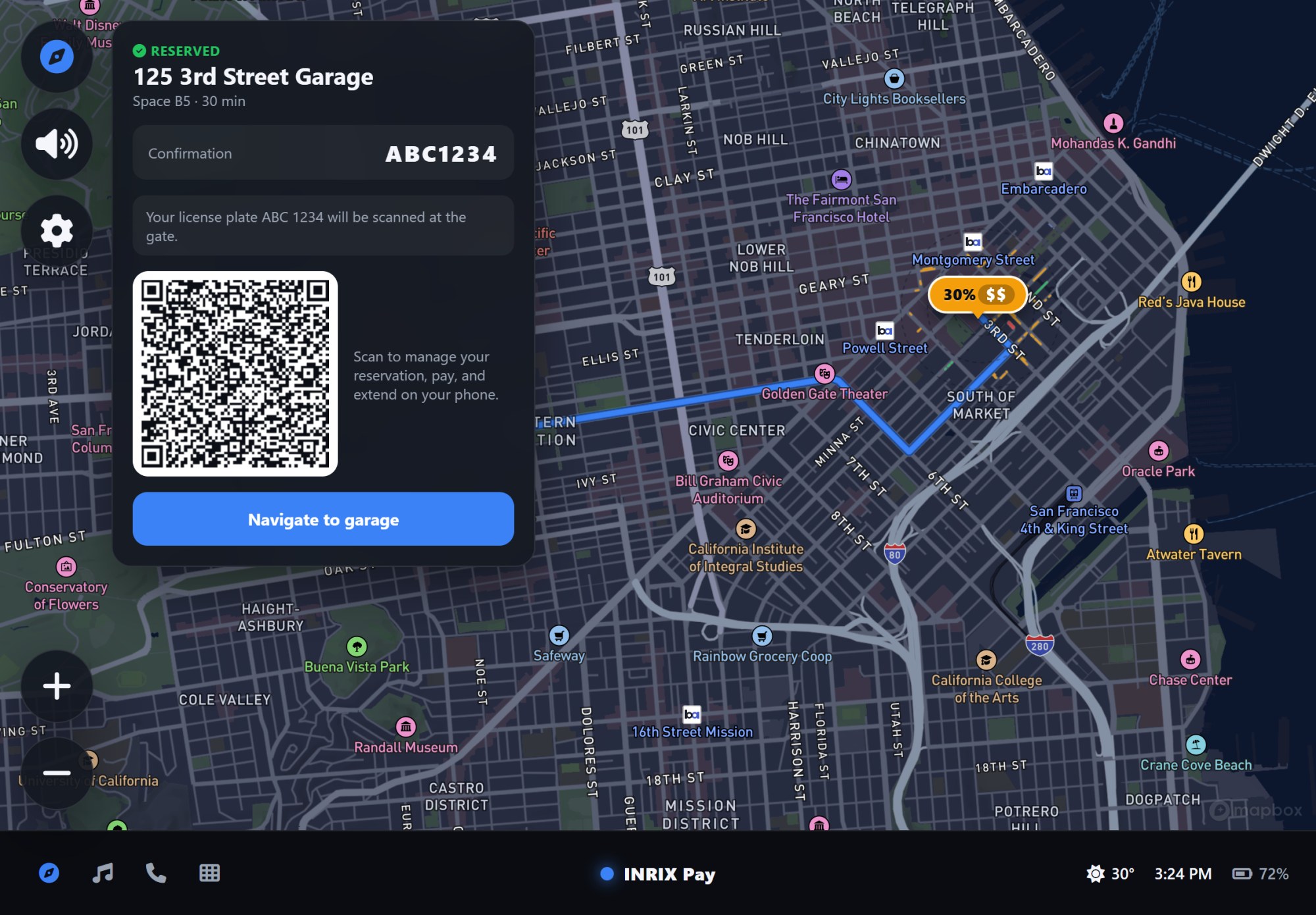
Payment also had to survive you leaving the car. Once you confirm a garage space with a PIN, a QR code hands the session off to your phone, where you can watch the countdown and add time. There's no app to install and no account to create.
Building it
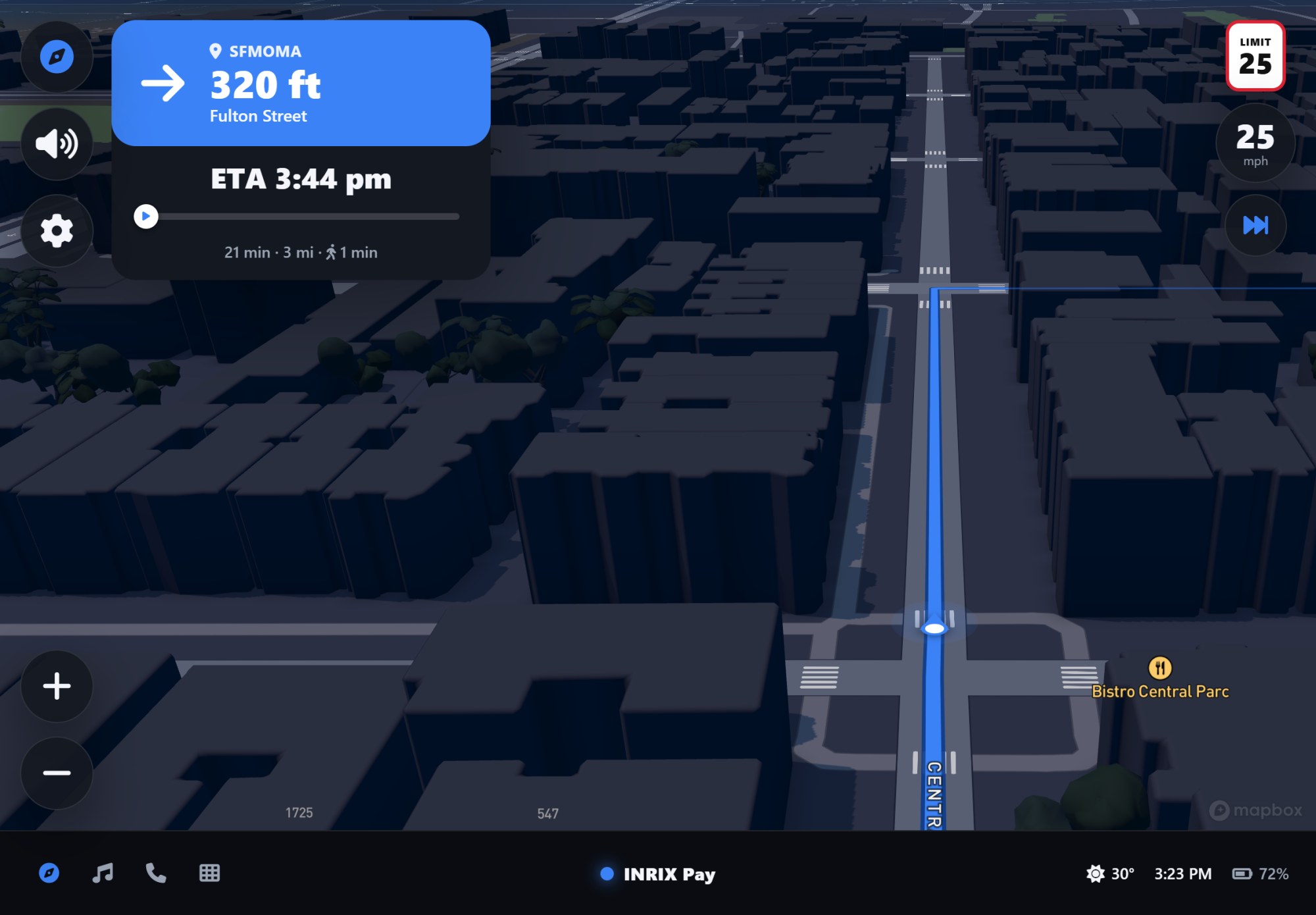
It's a progressive web app running on an iPad mounted in the dash. It runs on real GPS, with a simulation mode for demoing at a desk, which is what you get in the live demo. The data is real INRIX curb data for San Francisco, within a mile of Union Square. Navigation has a 3D chase camera, turn-by-turn banners, and a three.js car model on the map, and a finite-state machine runs the flow from search to arrival to payment.
I built it straight from my Figma flow in about a month, and it comes out to roughly 5,000 lines of JavaScript and CSS.
Outcome
INRIX uses it in automaker pitches and sales demos, and it's going to CES 2027.
What's next
The next step is getting it on the road. So far it has only run in simulation, which means the driving-safety choices above are still design intent. Real drives will show whether the glance times, glare handling, and tap targets hold up.
More screens