Aduro · 2021
Aduro Connect Care: A Type 2 Diabetes Coaching App
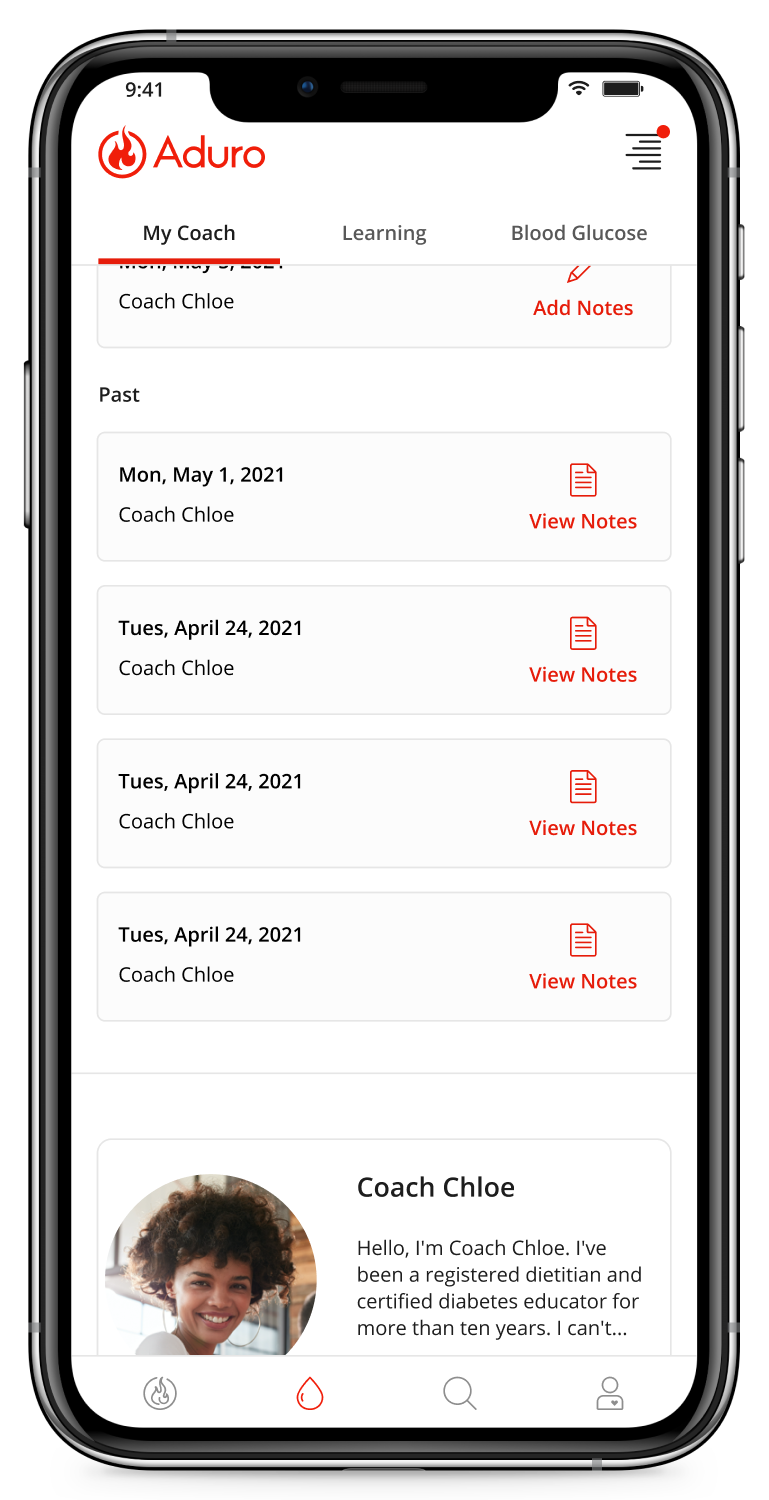
I designed onboarding, blood glucose tracking, and coaching for a Type 2 diabetes app, and ran the member research behind it, for Aduro's 2021 pilot.
Impact: After I left, the Aduro team reported 20% higher retention and 25% higher satisfaction with coaching.
- Role
- Product Designer
- Timeline
- 2021
- Company
- Aduro
- User Research
- Mobile App Design
- Usability Testing
- Health Tech
- Design Operations
The problem
Managing Type 2 diabetes mostly comes down to small, daily decisions made alone. Connect Care pairs members with a coach, but the app has to do the work between calls and it has to feel like it's about your diabetes. Otherwise it's just a wellness app that happens to mention blood sugar.
I joined a project that was already moving fast. My job was to figure out what members actually needed from onboarding, habit tracking, and blood glucose logging, and then design it.
What I did
I wrote the research plans, ran the interviews and usability tests, and turned the findings into design changes. This included semi-structured interviews with people living with diabetes, an email survey, and two unmoderated 5-person prototype tests on TryMyUI (one on habits and one on onboarding). The onboarding test ended with a short survey that I wrote.
The interviews changed how I thought about tracking. One member said, "I see my carbs like a reservoir." Another put the problem better than I could: "People end up throwing away an idea because they tried to get precision on it."
Key decisions
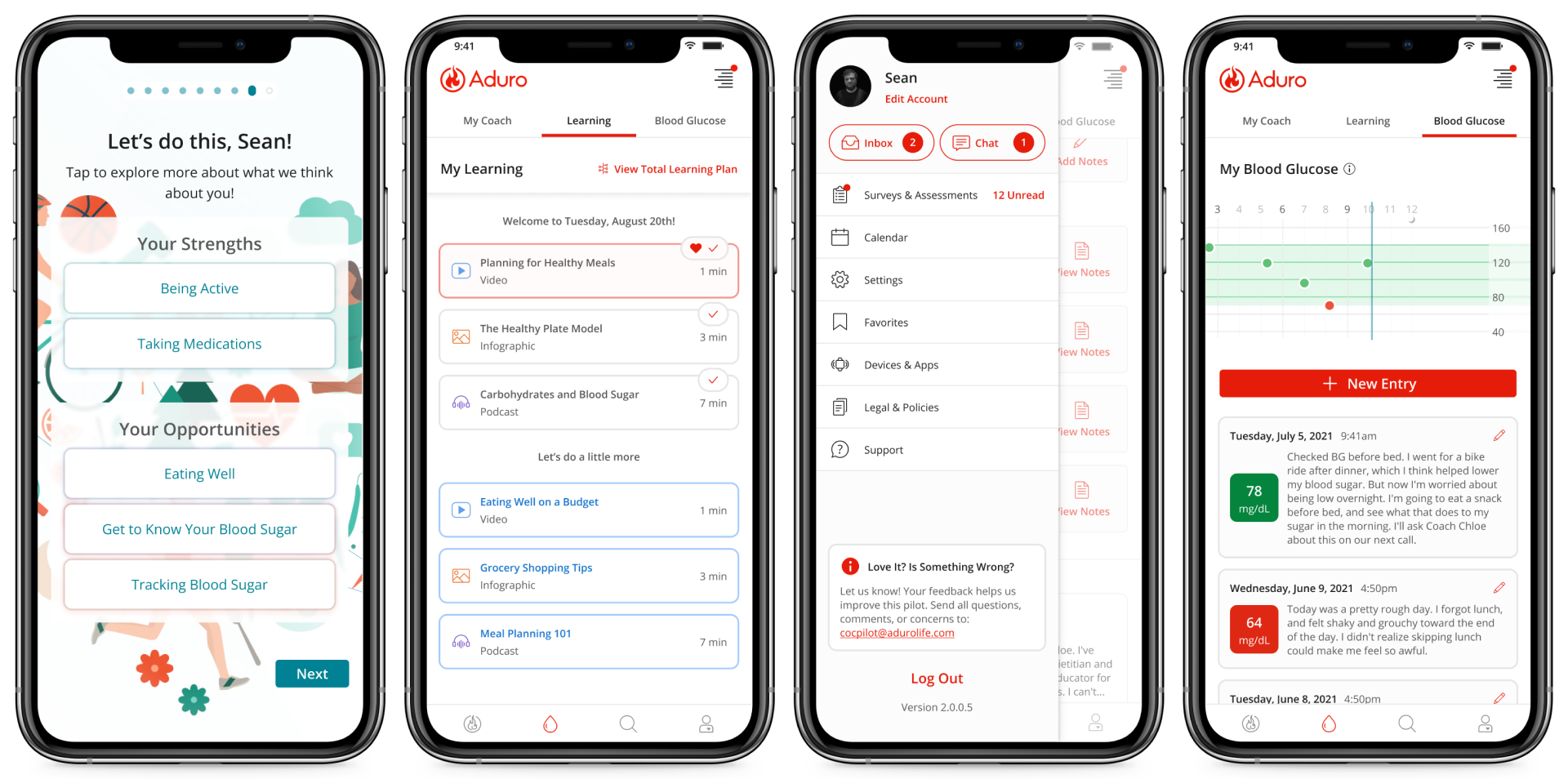
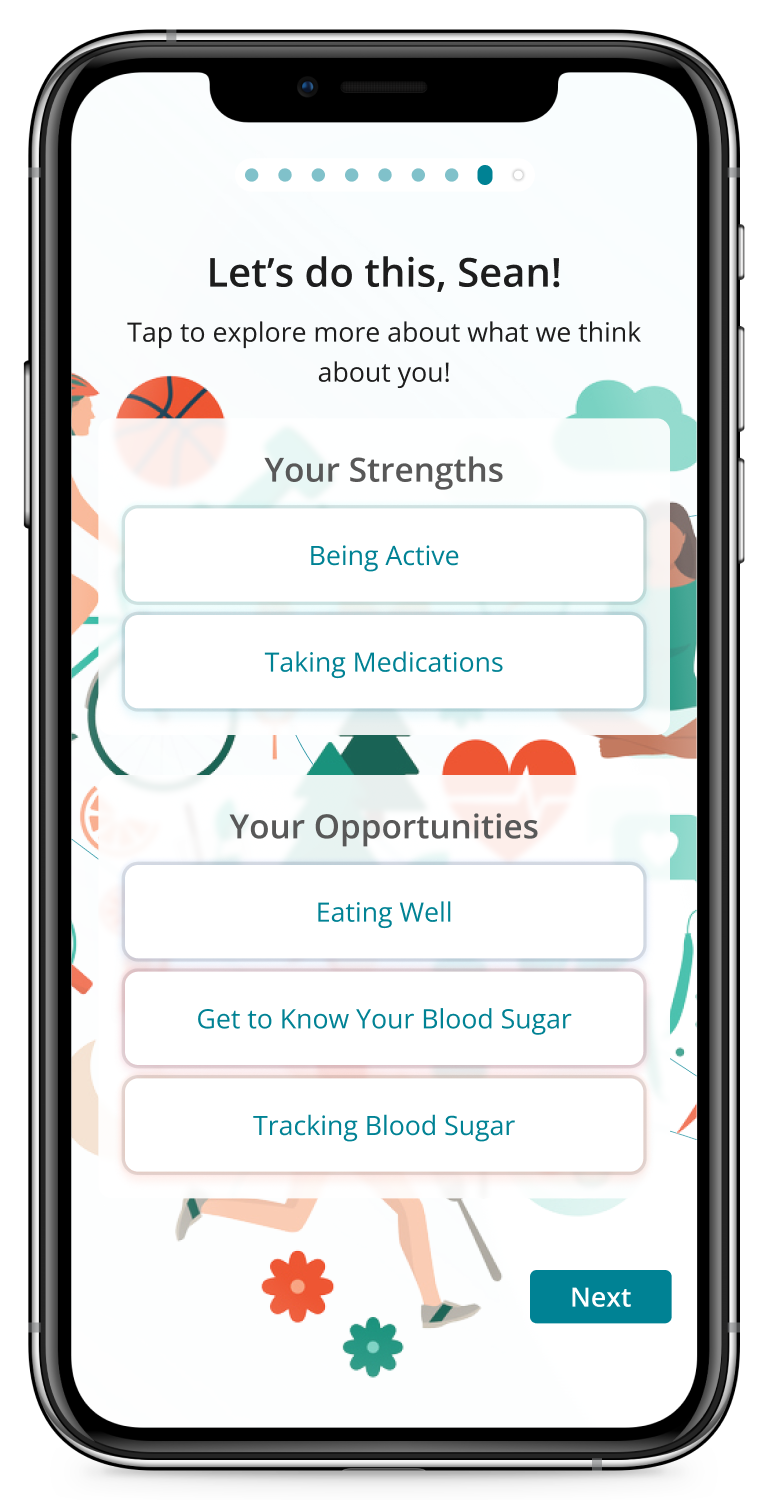
Ask about their diabetes, and ask their name. In the onboarding test, people expected questions about their A1C, their medication, and their devices. When those didn't come, one tester decided it was a general wellness app. The personal touches, on the other hand, landed well. "The most delightful thing was that it asked my name," one tester said. Another: "I loved the personalization. It made the program seem more friendly, warm and welcoming. I felt more safe providing all of my information." All five understood they'd be paired with a coach, and all five thought the length was right. The weak spot was the Strengths and Opportunities screen, which nobody tapped.
Small habits beat precise tracking. Members didn't want to log every food. "Reduce by 1, not cold turkey," as one put it. The habits test also caught a smaller problem, which was that a grey progress bar at 0% read as complete. An empty state that looks finished tells someone they're done before they've started, and that's the wrong message for a habit app.
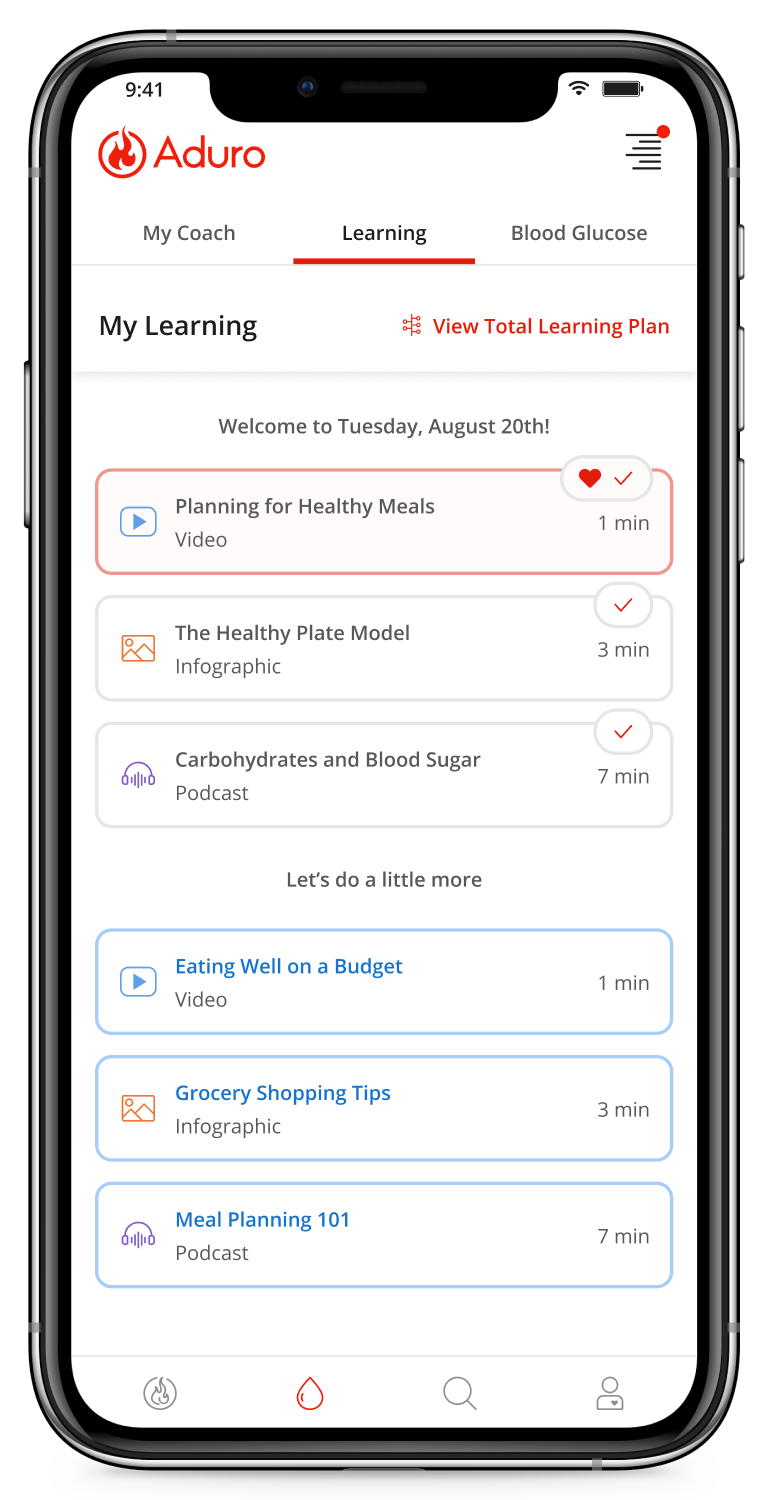
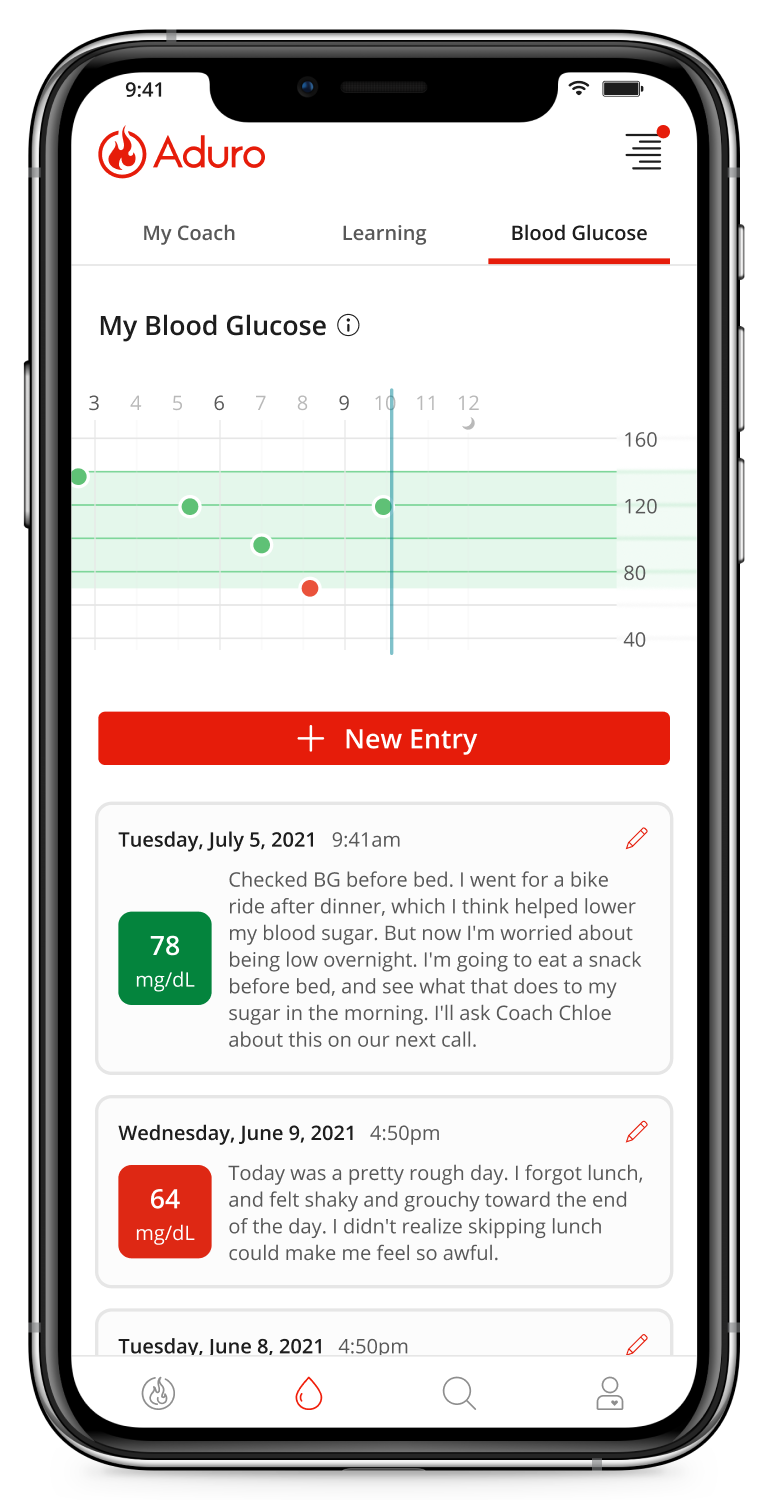
The blood glucose log follows the same idea. Each reading sits against the target range with room for a note, the kind a member writes after a rough day and wants their coach to see.
How the work moved
Research only matters if it reaches the build. Each study started as a written plan that the design director reviewed, and the findings went into a short deck for the weekly sync. From there, every design task became its own card on an Airtable kanban, and 57 of them made it to Done. I designed in Figma, and a UX writing and illustration studio worked in the same files. Each week I published a Design Updates page in Confluence for the developers, with the member and coach screens split out so that nobody built from the wrong version.
Outcome
The designs went to development for Aduro's 2021 pilot. After I left, the Aduro team reported:
- 20% higher member retention
- a 30% increase in members saying they could understand and manage their diabetes
- 25% higher satisfaction with coaching
When I left, the team put together a thank-you deck. Here are two lines from it:
"You do a wonderful job turning our brainstorms into compelling designs, and you have carried our product forward in your time here." Casey, Product Manager
"Coming into a fast moving project that was already a long way and matching the stride and bearing a heavy work load." Justin, Design Director
What I'd do differently
The thing I'd change is the coach research. We planned to interview five coaches every two weeks, but it didn't happen before I left, so the coach side was designed with far less evidence than the member side.
More screens