INRIX · May 2025 – Present
INRIX One: Rebuilding a Mobility Analytics Suite as One Platform
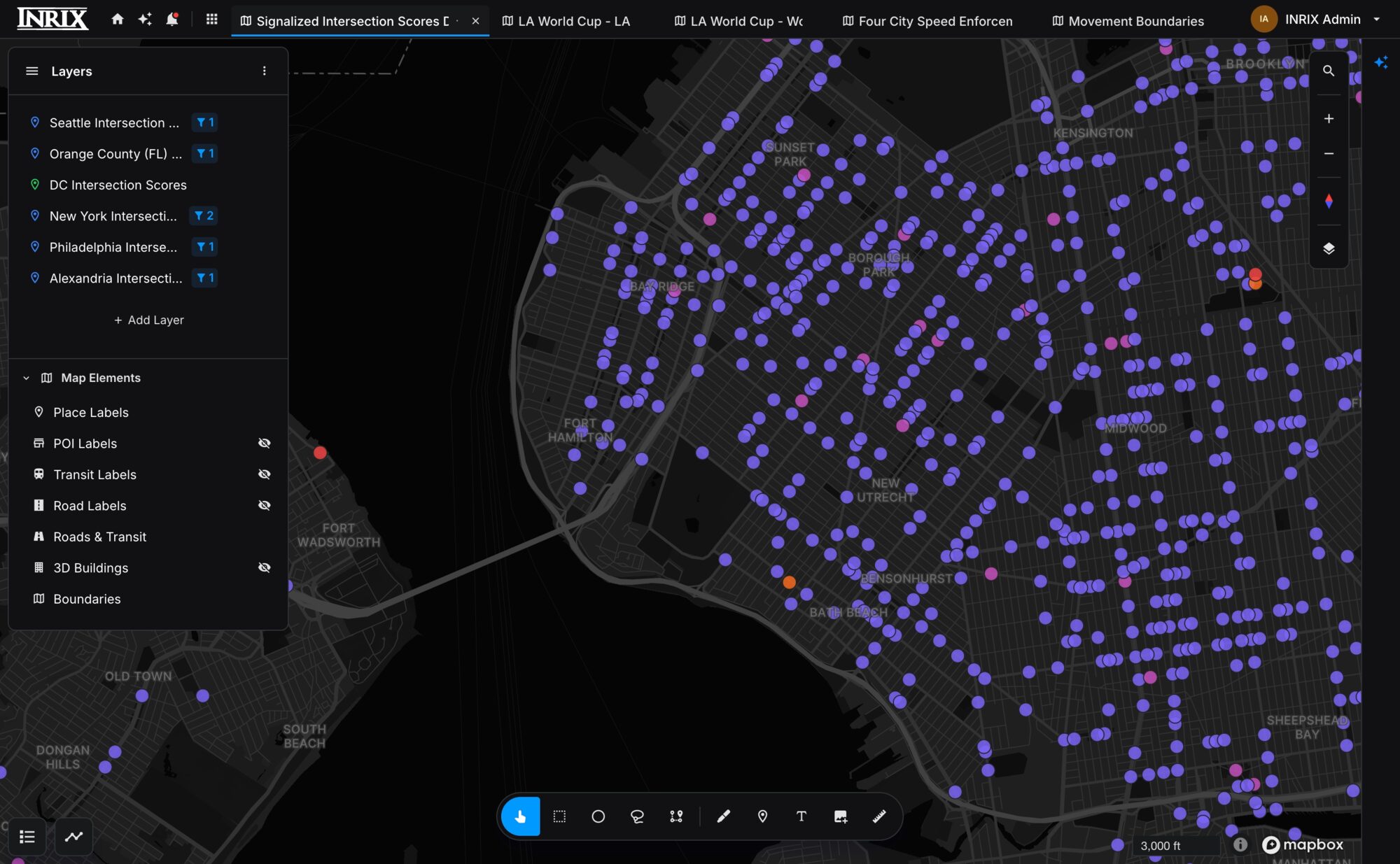
I pitched, designed, and built INRIX One, the platform that is replacing INRIX's suite of traffic, safety, and curb analytics products. Leadership adopted it.
Impact: Changed the company roadmap: INRIX's IQ product suite will be phased out in favor of INRIX One.
- Role
- Lead Product Designer & Design Engineer
- Timeline
- May 2025 – Present
- Company
- INRIX
- Product Strategy
- Design Engineering
- AI Product Design
- Design Systems
- Data Visualization
Walkthrough
The problem
"Slow and laggy." That's how one customer's head traffic engineer described our load times. Another customer went with a competitor, and the reasons they gave were load time, cost, and how we demoed.
The problem wasn't any one slow page. INRIX had grown into 11 separate analytics products, each with its own login, interface, and copy of what was essentially the same infrastructure. As an example, if a safety analyst wants to see crash data next to speed data, they have to open two products, export from both, and finish the job in GIS. Since nothing they built could be saved, they'd do it all again the next month.
Additionally, our Voice of the Customer feedback included 45 requests across 7 products, and they traced back to that same missing foundation.
What I did
This wasn't something anyone asked me to fix. I gathered pain points from customer interviews, sales and customer success, support tickets, and usage data, and I audited every product in the suite myself.
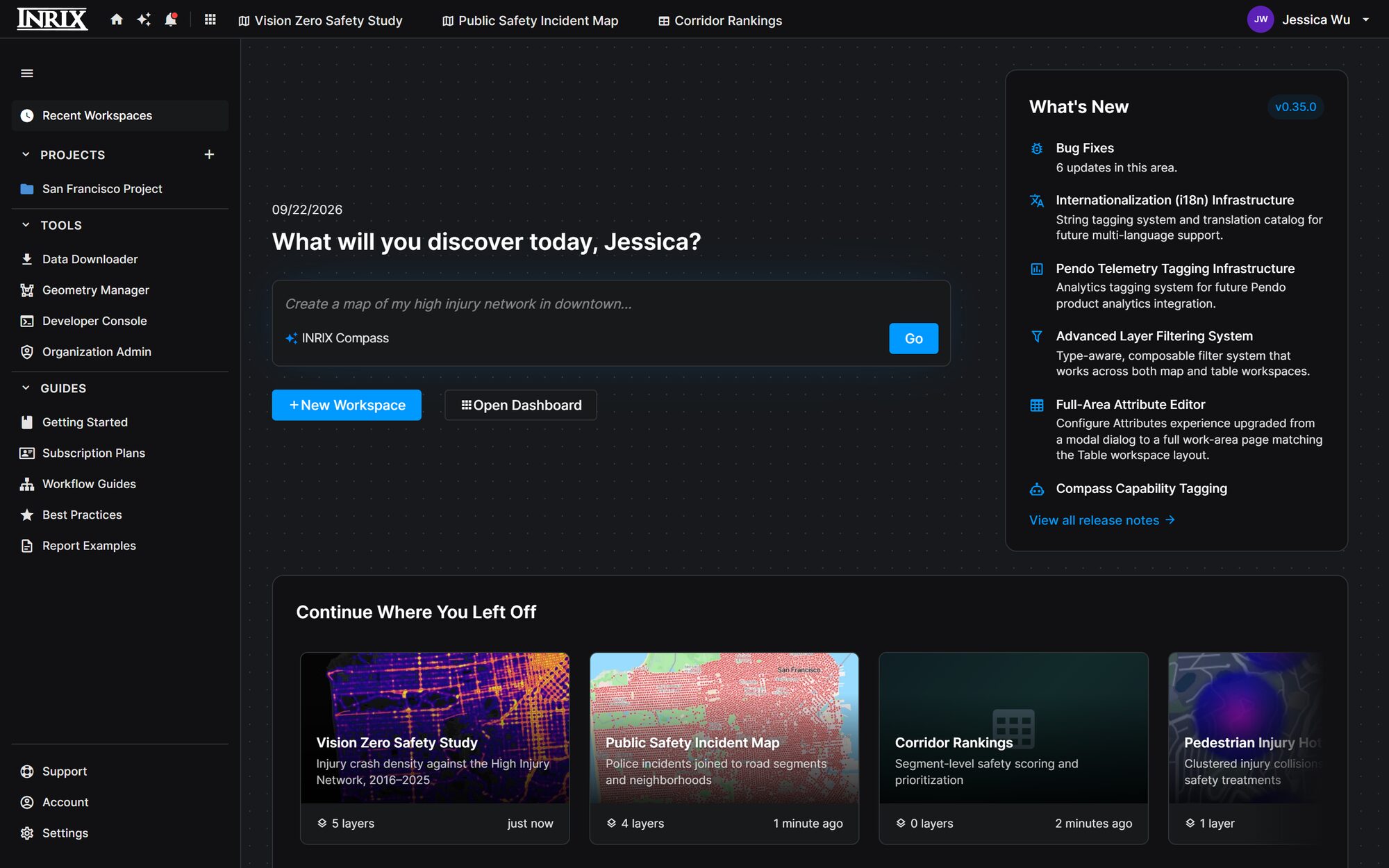
From there I wrote a product vision, designed the platform in Figma, and presented it to a few product managers. That said, slides can only communicate so much, so I built it with Claude Code and demoed working software to the product team. By the time I pitched leadership again I had the real thing running behind me, and they bought in.
Key decisions
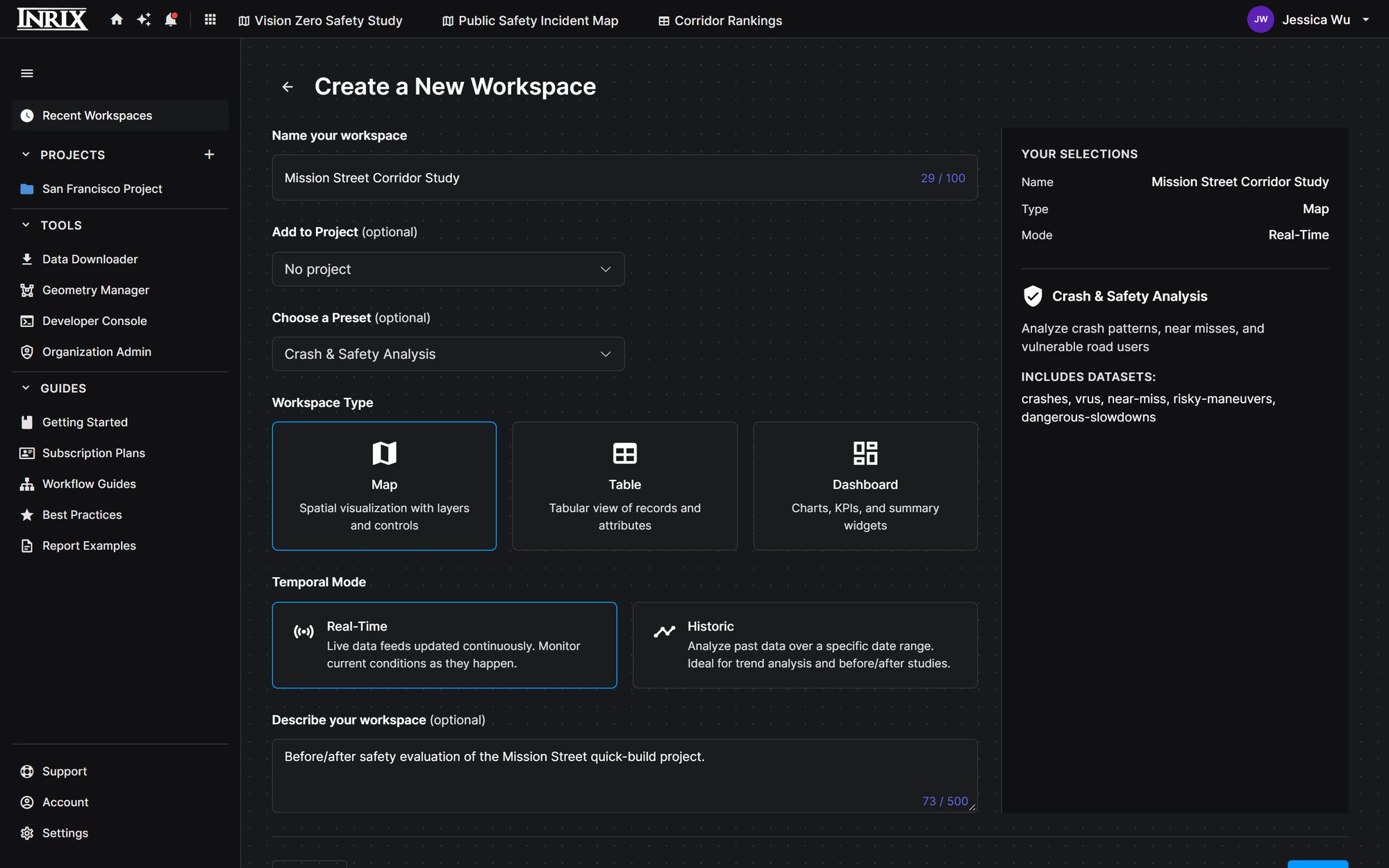
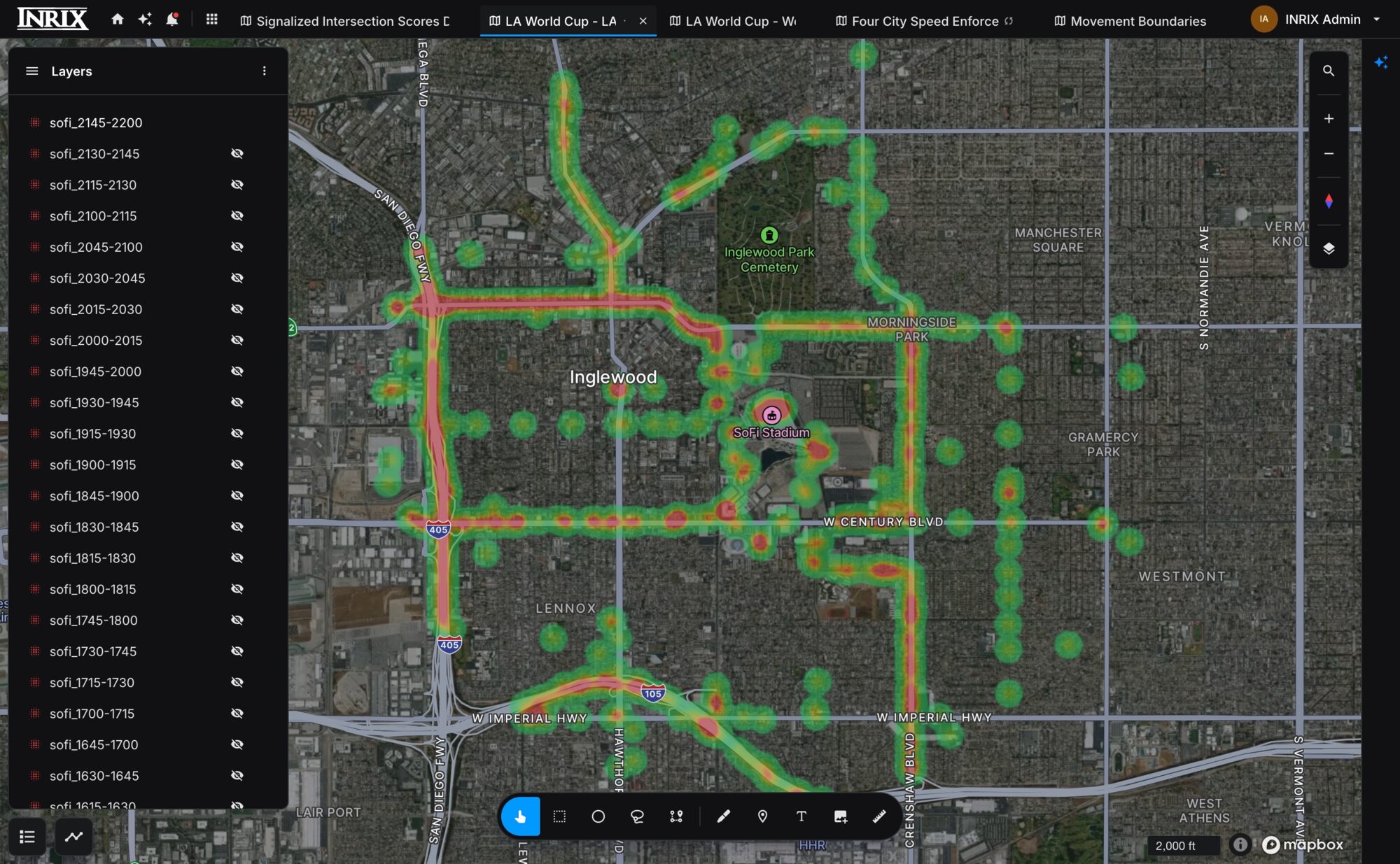
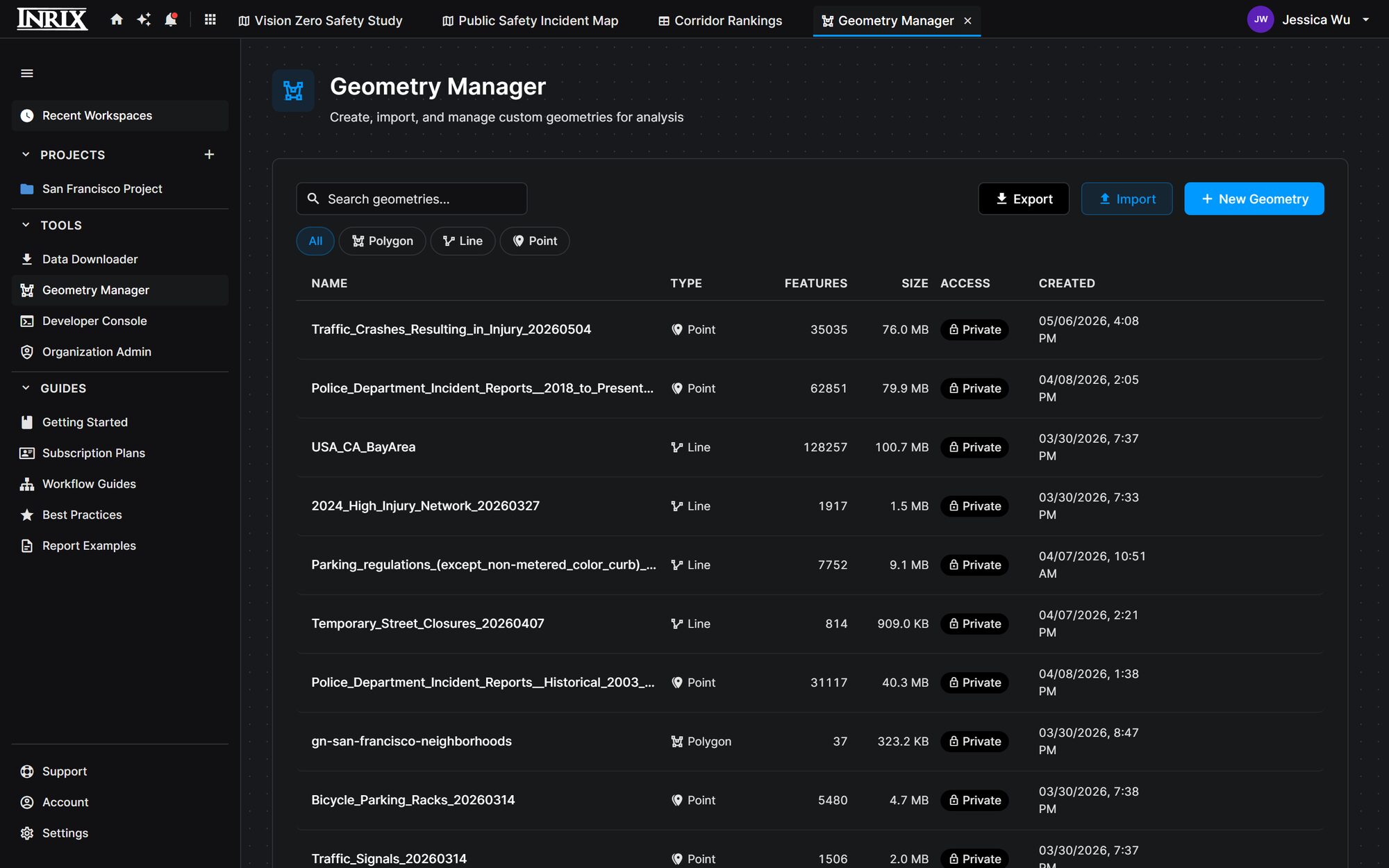
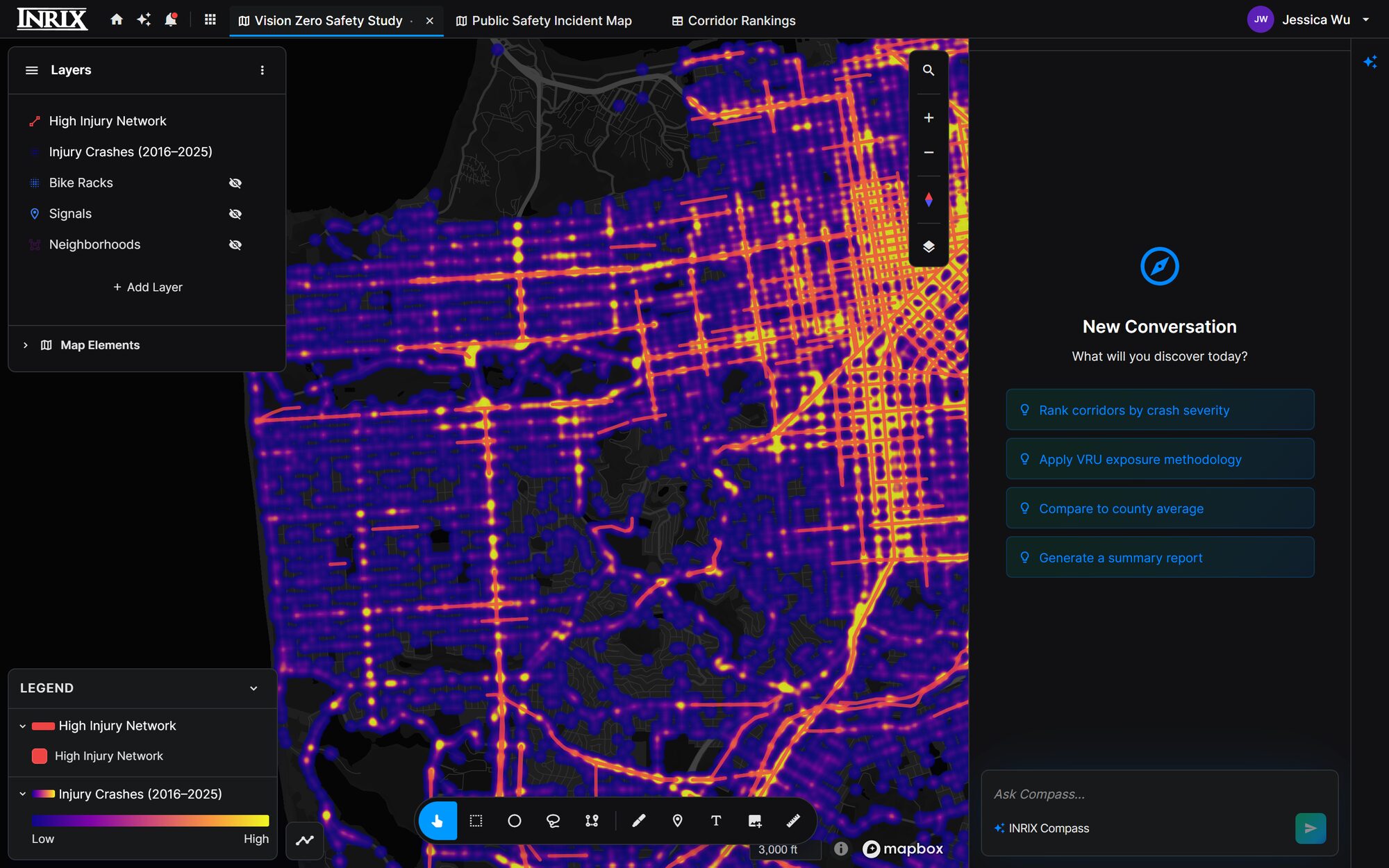
Workspaces behave like browser tabs. Every analysis lives in a workspace that you can save, share, and come back to, and a workspace can hold layers from any product. That means you can have crash points on top of speed corridors on top of signal locations, each with its own filters and styling. I went with tabs over project folders because it's a mental model people already have: they can flip between studies the same way they flip between web pages. This did come at a cost, though, since screens that used to be full custom apps had to be reduced down to layers and panels on a shared map.
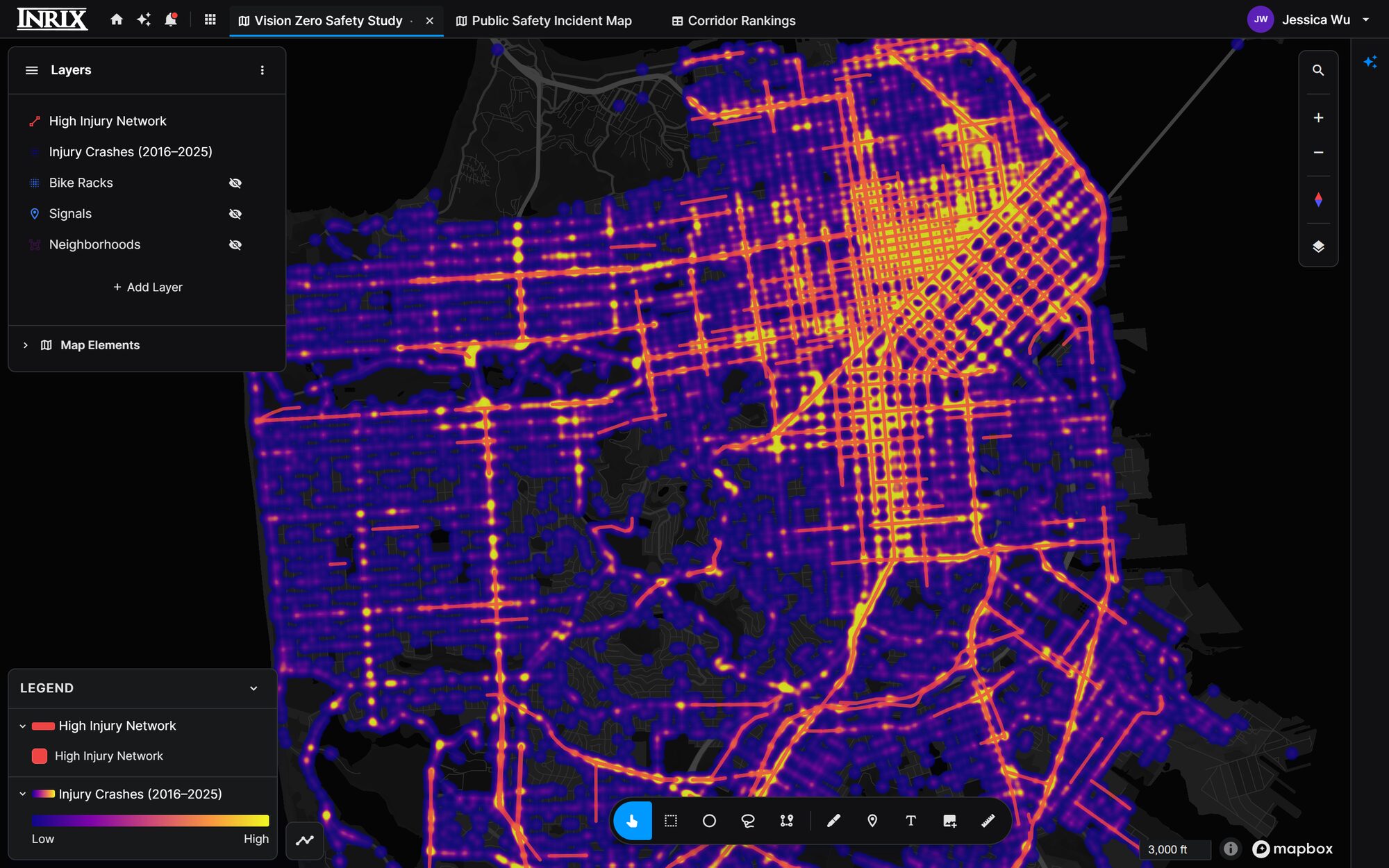
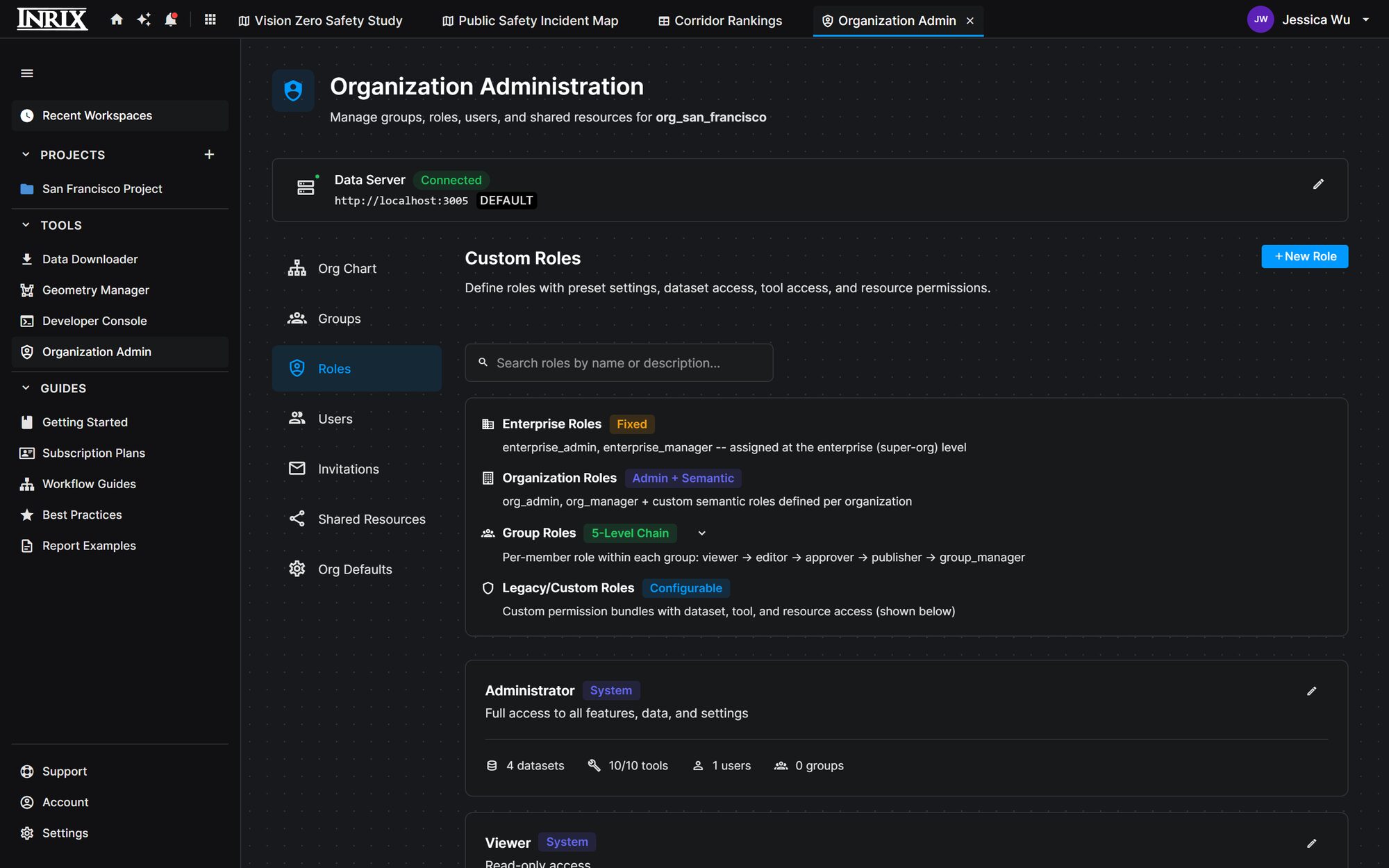
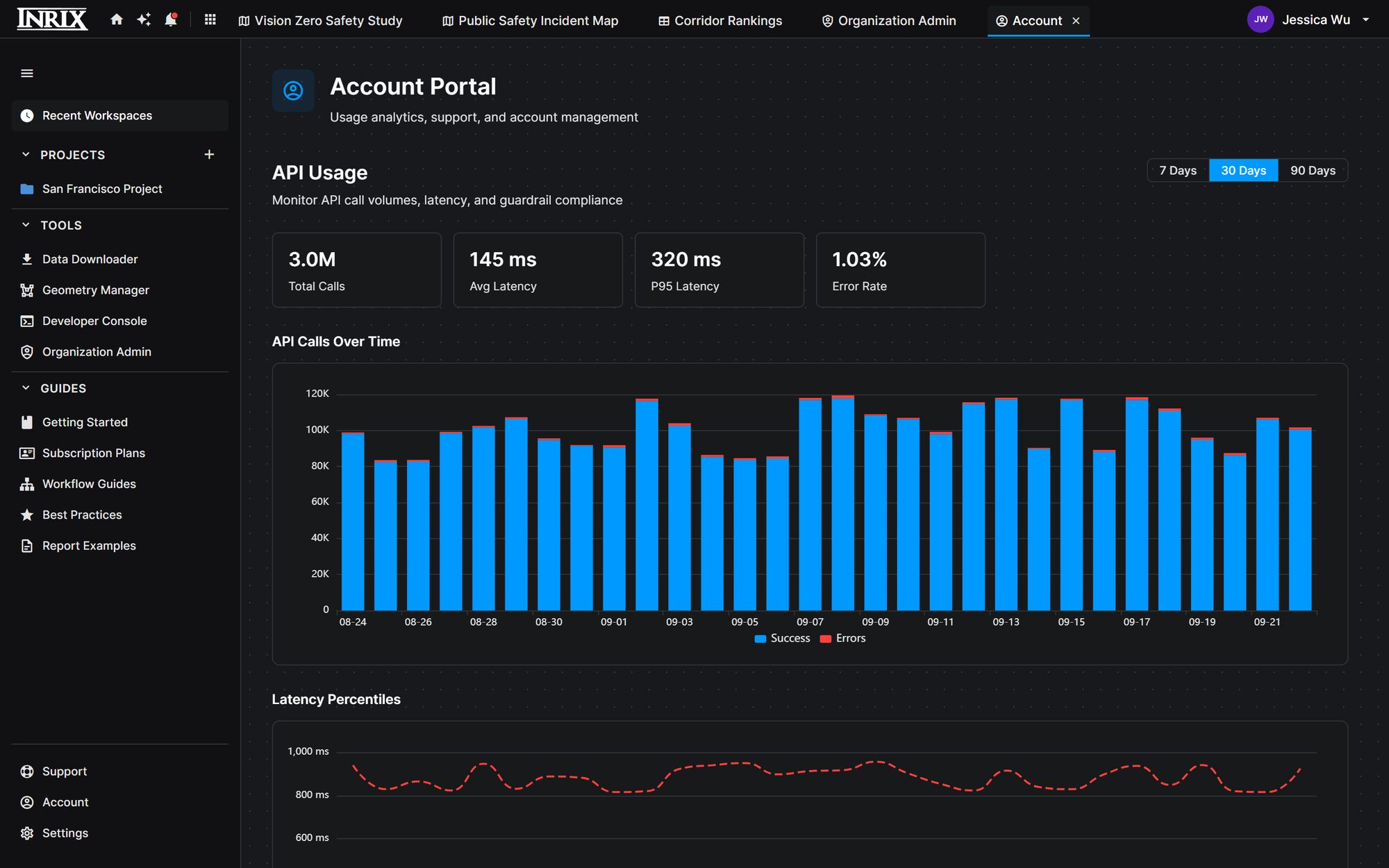
Build the shared parts once. Access control, the Geometry Manager, the data exporter, and the AI entry point each existed in every old product, which meant customers had to learn every version. Building each of them once meant a bigger rebuild up front, but ultimately it leaves far fewer places for things to break.
Compass works on the map you're looking at. Compass is the AI assistant. It sits beside the map and uses whatever is in view, i.e. your layers, filters, time range, and viewport. Under the hood there is a Planner that figures out what you're asking, a Navigator that moves the map and layers, and an Analyst that explains the data. I wrote every Compass capability as a tool definition, and the platform's APIs are exposed through an MCP server. For now Compass runs on rules, but since the capabilities are already defined, it won't need a redesign when we plug in a production LLM.
Building it
All told, it's about 199,000 lines of TypeScript, Vue, and SCSS, with 265 components and 300 commits between March and September 2026. As I write this, it's at version 0.35.
The design system is code. Tokens drive the light, dark, and translucent "glass" themes, so changing a color is a matter of changing a single value. axe-core checks accessibility and Playwright covers the main flows.
The bigger change was to how the team builds. Early on, the INRIX One team built a separate IQ product as a test of working with AI as a team, and the retro didn't pull any punches: "The gap isn't the skills of the engineers involved. The gap is missing structure, guardrails, engineering discipline, and AI discipline." In response, engineering and I set up the process we use now, which includes an architecture review before anyone builds, vertical slices by feature, shared AI skills, model routing with cost tracking, and a demo every day.
Outcome
- Leadership adopted INRIX One as the company's platform direction.
- The roadmap now phases out the IQ suite, and each of the 23 IQ modules has a destination: INRIX One, self-service, internal tools, or retirement.
- The alpha already covers half of the 45 customer requests.
- We've shown it to customers, and the team builds differently because of it.
What's next
The next step is hooking Compass up to a production LLM. After that, we need to measure what we planned to measure from day one: workspaces per user, how often people mix data types, and how long it takes to get an answer.
More screens